
Native Plant Communities Strengthening Human Communities
By Baylee Bessingpas, Minnesota GreenCorps Member
For this week’s blog, we are featuring an interview with local shoreline restoration expert Laura Mendoza of Great Roots LLC! Great Roots LLC serves the greater Brainerd Lakes and Aitkin areas and primarily takes on restoration projects between the months of April and October. Thanks for sharing your expertise and perspective, Laura!
Q: What is Great Roots LLC?
A: Great Roots is a company dedicated to design and implement native landscape projects, specializing in shoreline restoration.
Q: In a nutshell, what is your role at Great Roots LLC?
A: I run every aspect of the business myself, so I wear different hats. I would say many of my roles are oriented towards education, sometimes posting on social media explaining why native vegetation is so important, especially around our lakes. And when I am installing a project, guiding the volunteers and landowners through the process and importance of each step.
Q: What makes Great Roots LLC unique from other landscape and restoration companies?
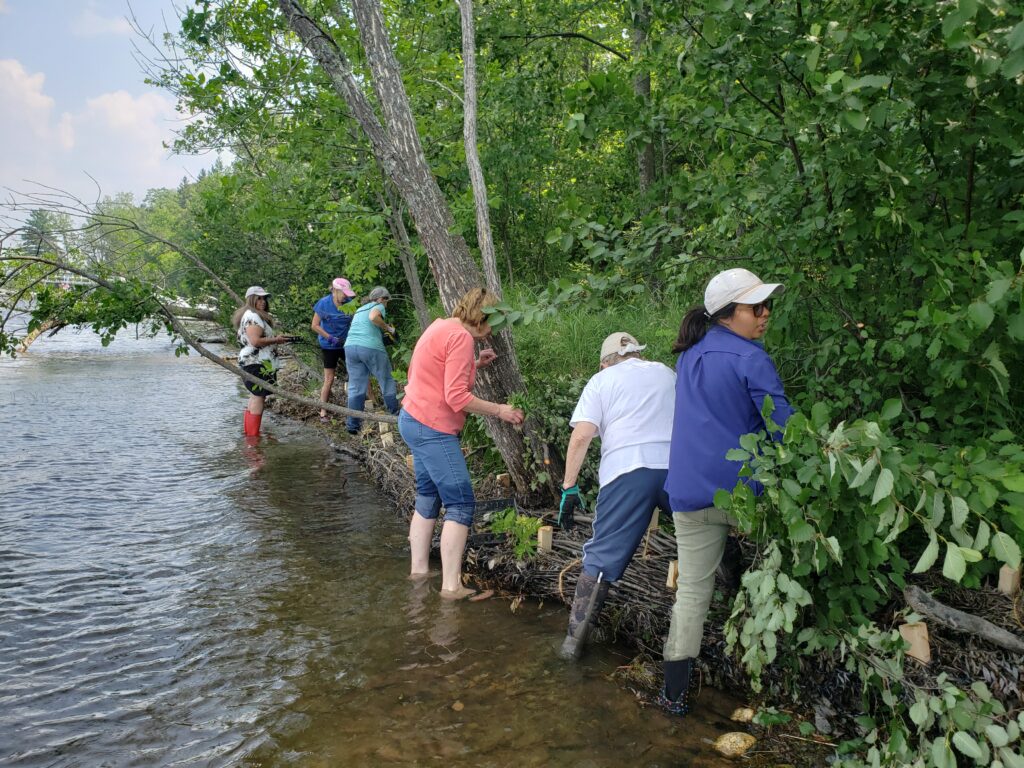
A: We have a community driven approach, meaning the landowners, their families, friends or neighbors get together to learn as they help with the installation. This approach not only gives people the skills to maintain their project, but also provides them with the knowledge so they can spread the importance of natural shorelines.
Q: How has your relationship with the land grown and developed over time? What inspired you to pursue a career growing things and restoring landscapes?
A: I have always been inspired to educate people around me to help protect natural resources. I heard about the water shortage crisis as a kid growing up in Mexico City, and created an informational meeting with my family to help us do our part to save water. I went to college for environmental science to learn more. Then created a business teaching sustainable food production and community education for gardening focusing on the environmental needs of the area. I moved to Minnesota, and met a retiring shoreline restoration expert who shared her 30 years of experience. Then I created Great Roots to continue restoring shorelines. The needs of the local environment of the areas I have lived in have shaped the work I do to make the best impact that I can.
Q: If someone were to start with doing or changing one thing about their shoreline property landscaping, where would be the most impactful place to start?
A: If there is currently a lawn that goes all the way to the water, they could stop mowing at least 5ft away from the water. Then identify the vegetation that grows back. I have to say that this needs to be done carefully, as they would need to make sure that there isn’t any invasive vegetation.
I have seen many properties where the vegetation was actually not grass but native sedges that help protect shorelines, so then I helped them select flowers to add diversity. I have also seen other properties where invasive species showed up, so they needed to control those before adding any native vegetation. They could use an app on their phones to ID plants or ask for help from their local Soil and Water Conservation District (SWCD) or a native plant landscaper.
Q: What are some common misconceptions about shoreline restoration?
A: Some people think that riprap is shoreline restoration, and while it might be the only option for sites with severe erosion, in most cases it is not necessary. Riprap also lacks the environmental benefits that a natural shoreline with native vegetation provides, and it can increase water temperature. Riprap is expensive and only strongest the day it is installed, but degrades over time and usually leads to expensive maintenance.
Some people think that a natural shoreline would look “messy” compared to the “clean” look of a lawn, but they can actually look beautiful! Diverse vegetation offers blooms throughout the season, providing important wildlife habitat. Native vegetation needs less maintenance as it establishes over time.
Q: What are some of the most common site concerns property owners have when you go to do a site evaluation?
A: Erosion/soil lost. Especially with properties that have been in the family through generations, people have mentioned that they have noticed the shoreline creeping in, one of the most extreme cases I have heard of, they had lost about fifteen feet. While it was a hard decision to transform their naturally sandy beach, they knew they needed to do something to prevent any further erosion.
Q: Which plant species used in your restoration projects excite you the most, and why?
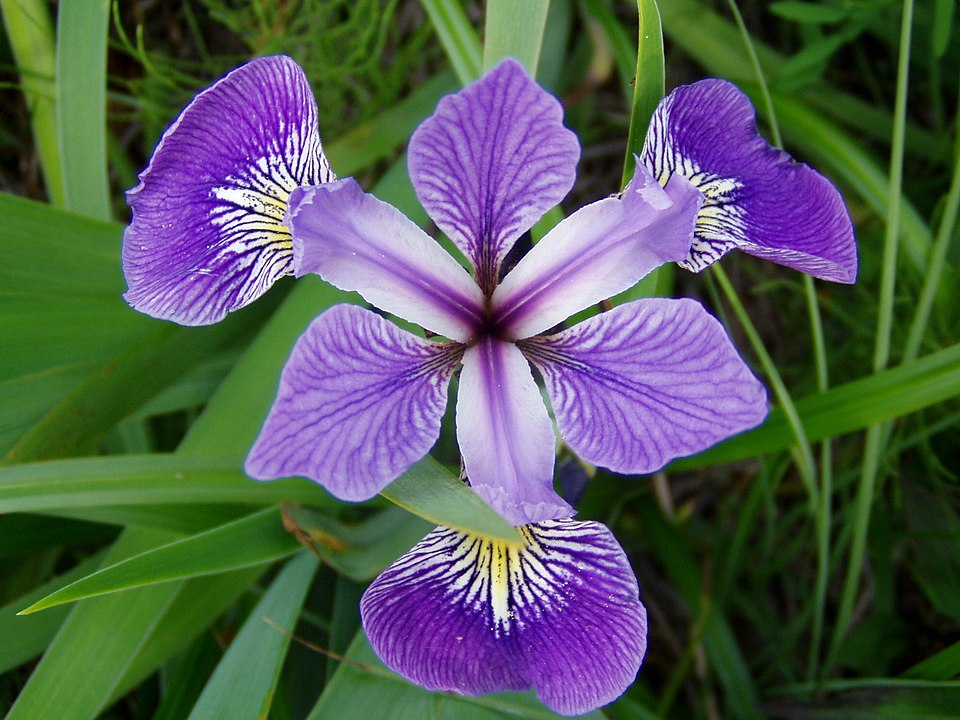
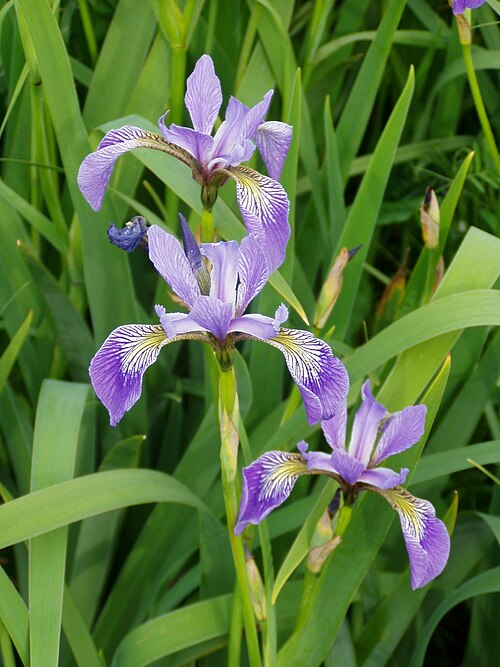
A: Blue flag iris is one of my favorite flowers, so much that I integrated it into my logo. It is one of the early blooms of the season, and it also seems to protect shorelines from muskrats, as it can be toxic to them, keeping them away. While muskrats are part of the lake ecosystem, they can dig tunnels into people’s lakeshores that create problems.
Q: Let’s say that a property-owner has restored their own shoreline, and wants to encourage their neighbors to do the same – what would be the main talking points you’d recommend using to sell the neighbors on the idea?
A: They could start by talking about why they decided to do it, and which positive changes they have noticed since restoring their shoreline, and try to relate to what their neighbors might prioritize. Some of the main benefits that can encourage people to restore their shore can be included in that conversation. A restored shoreline with native vegetation can decrease the time they dedicate to maintain their lawn, support pollinators, beautify their space, and improve fish habitat. Deep roots help anchor the shore, preventing erosion, filtering water (preventing algae blooms), and protecting the shore against ice heaves.
It is also good to explain how the benefits magnify when more people do it. Being an example is a great starting point!
If a neighbor is new to the idea and wants to know more before committing, helping out during a neighbor’s projects is a great opportunity to see what it is all about and to get their questions answered. That first-hand experience really plants the seed!
Q: Have any restoration projects throughout your career been especially meaningful to you? What made these projects stick out?
A: Definitely, I still remember the first project I collaborated on and still maintain contact with the landowner, she has become a great advocate for shoreline restoration.
I also have worked on a couple of projects where multiple generations of the family get involved with the installation. Everyone was excited to help and learn, and to contribute to protect a space that means so much to their family, and where they all share many memories. Their energy is contagious and I feel fortunate to be a part of it.
Q: Is there anything else you want people to know about shoreline restoration?
A: A shoreline restoration project doesn’t mean you have to quit having a nice view to the lake or using your space the way you would like to. A shoreline restoration design can integrate your needs and find a balance where you get the most environmental benefits.
Q: Are there any resources you would recommend for property owners located on non-lakefront properties that still want to landscape in a way that benefits wildlife and water quality?
A: Include native vegetation in your landscape, for stormwater management rain gardens are a great option to capture the water and offer a space for it to filter any excess nutrients or contaminants.
Also avoid the use of fertilizer and any unnecessary chemicals, they can affect pollinators and other wildlife, they can also contaminate the water and affect the ecosystem.
Q: If a landowner is interested in scheduling a consultation with Great Roots, what steps should they take and how should they contact you?
A: Feel free to email me at greatrootsmn@gmail.com – I look forward to hearing from you!
Q: For landowners that might be interested in restorations in other parts of Minnesota or other states, how would you recommend looking for local resources?
A: Reach out to your local Soil and Water Conservation District (SWCD) office, they might be able to guide you through your project or direct you to local companies that can help you. Some SWCD even have cost-share programs to support shoreline restoration projects.
Balanced Shoreline Plantings
Much like people, plants are stronger as a community than as individuals – different types of plants have complementary strengths, and when planted together they all contribute to the balance, stability, and resilience of the system as a whole. Three types of plants that work in synchrony to maximize the benefits of a shoreline planting are shrubs, graminoids, and forbs!
Dave Powell; USFS
Chris Evans; iNaturalist
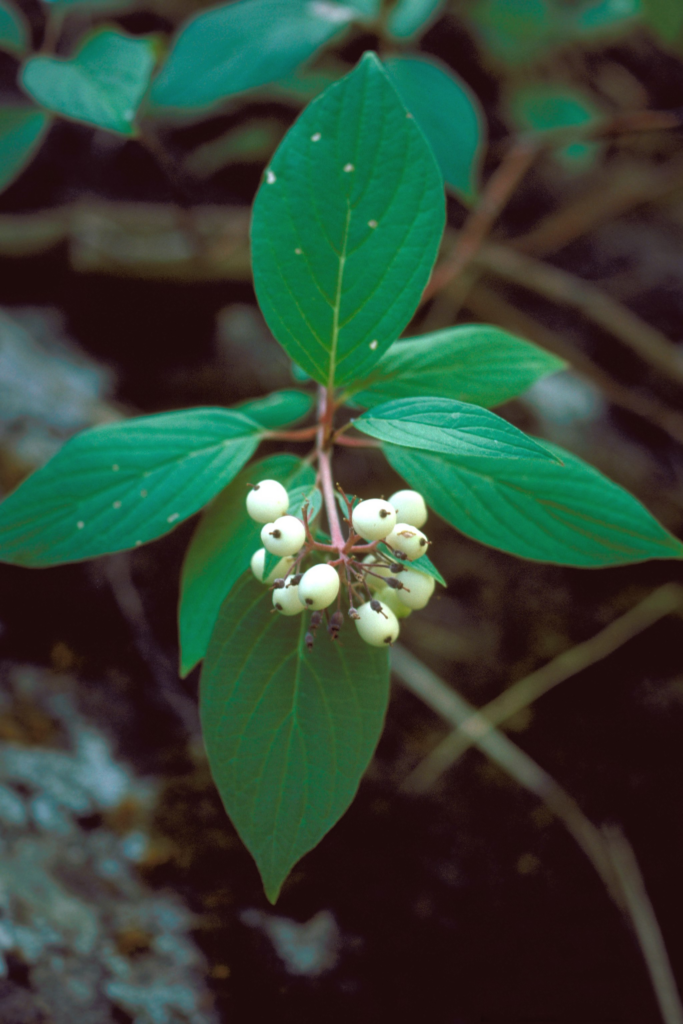
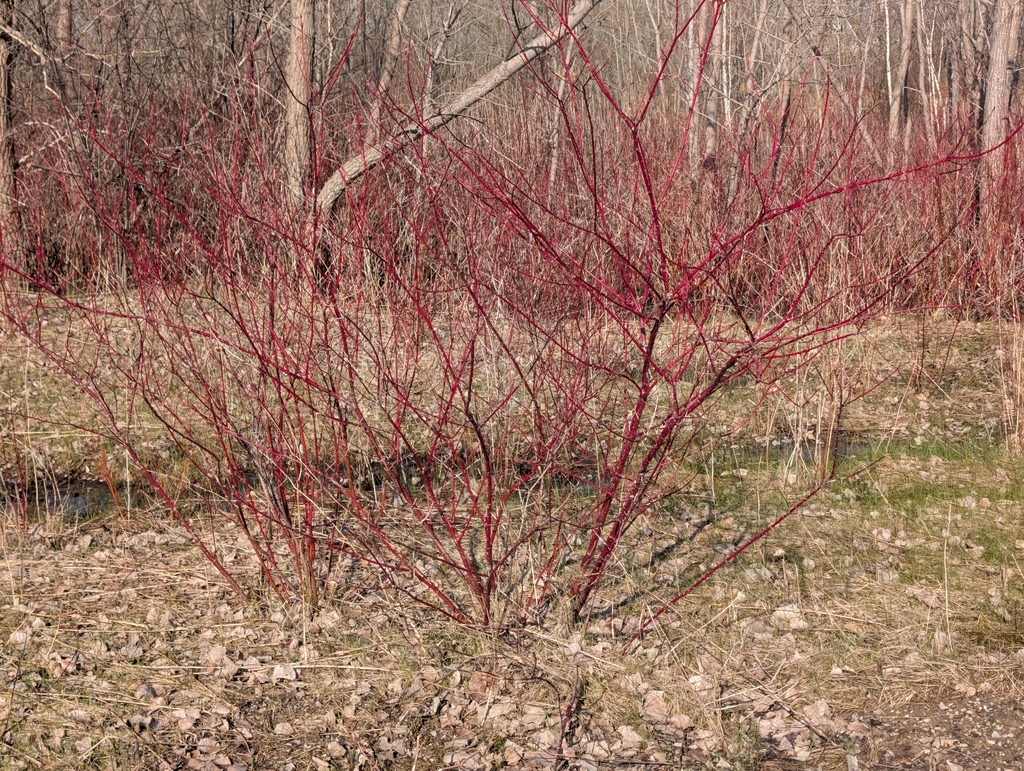
Shrubs are multi-stemmed woody plants that are generally less than 15 feet tall. The deep woody roots of shrubs provide structural support to stabilize shorelines and serve as a line of defense from ice, wind, rain, and waves. One of Laura’s favorite shrub species to include in a shoreline planting is the red-osier dogwood (Cornus sericea) – sporting vibrant red stems that provide a much-appreciated pop of color in the drab depths of winter, this fast-growing and hardy shrub is a powerhouse for controlling erosion and stabilizing the banks of lakes and rivers. These deep roots can also serve to break up compacted soil, making it easier for rainfall to infiltrate into the groundwater supply. Red-osier dogwood forms dense thickets that provide cover for wildlife and produces white flowers that support pollinators before turning into white berry-like fruits that are a favorite snack of birds!
Matt Lavin
Jack-y; iNaturalist
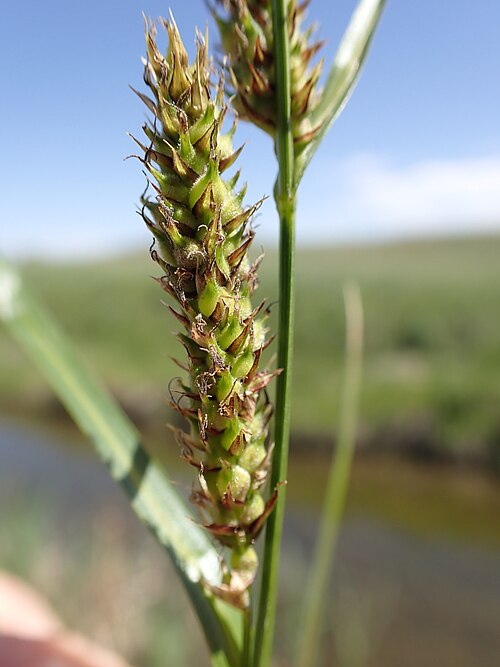
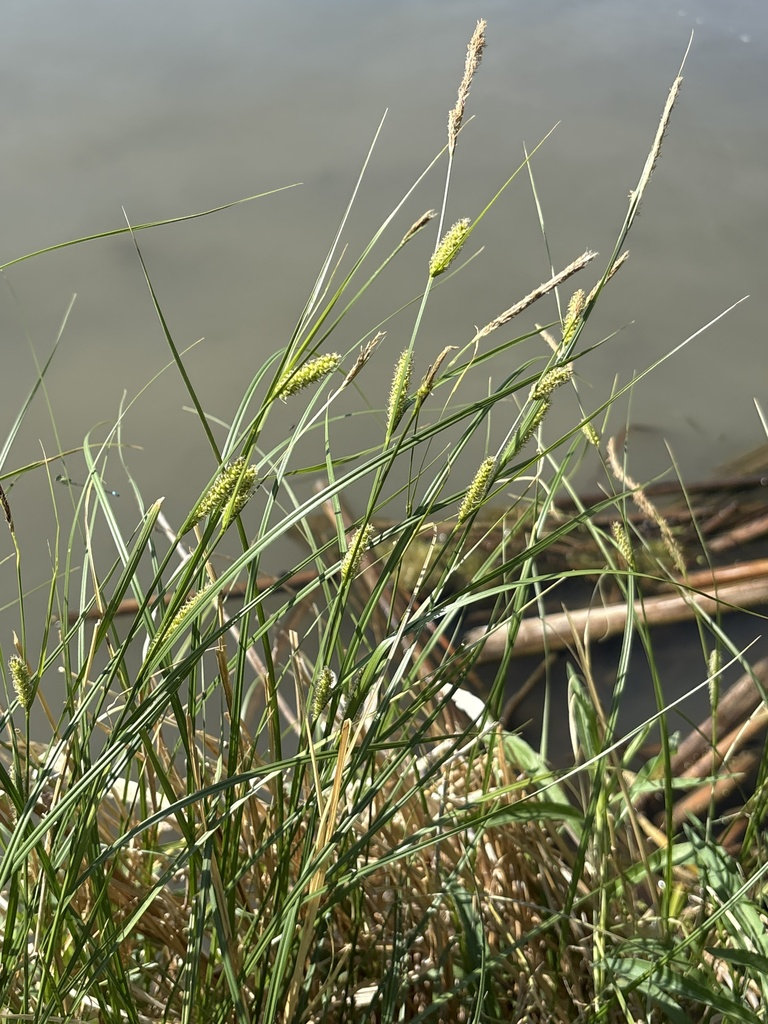
Graminoids are grass-like herbaceous plants – our grasses, sedges, and rushes! An all-star included in many of Laura’s plantings, woolly sedge (Carex pellita) is an adaptable species that thrives in moist environments and forms dense and fibrous root systems, making it a great candidate for shoreline and wetland restorations. The dense roots hold soil in place and help absorb the energy of crashing waves while serving as a filter preventing nutrients like Nitrogen and Phosphorus from entering the water. The roots and leaves of graminoids like woolly sedge also serve as food and habitat for small critters like the invertebrates forming the base of the food chain!
Danielle Langlois
Danielle Langlois
Forbs are flowering, leafy, herbaceous plants – the type of plants we might call wildflowers. The roots of forbs will intertwine with the root systems of shrubs and graminoids, increasing stabilization and resilience against erosion and pollution. During the growing season, the leaves and flowers help slow water runoff while providing incredible support for biodiversity, especially native pollinators! Flowers bring beauty and aesthetic appeal to any planting, and are often the plants we most enjoy cultivating – as Laura mentioned in the interview, the blue flag iris (Iris versicolor) is a personal favorite flower that she included in Great Roots’ logo. The beautiful and uniquely shaped purple flowers of the blue flag iris attract bees, butterflies, and hummingbirds, and this plant’s success in moist environments make it a popular choice for shoreline and rain garden plantings.