Responsible Recreation During Peak Season
By Baylee Bessingpas, Minnesota GreenCorps Member
While human recreation can impact loons and their habitat throughout the year, the weeks around the 4th of July bring some of the most dangerous conditions loons will face during the breeding season. This time of year is the pinnacle of summer recreation in the Brainerd Lakes Area and beyond, where the level of boat activity on our lakes reaches its peak. At the National Loon Center, we understand that getting out on the lake to celebrate summer holidays “Northwoods Style” is integral to our cultural identity as Minnesotans – our goal is to empower Minnesotans with the information they need to make safe and responsible choices about recreation that will allow us to keep our loons and lakes healthy and thriving for generations to come!
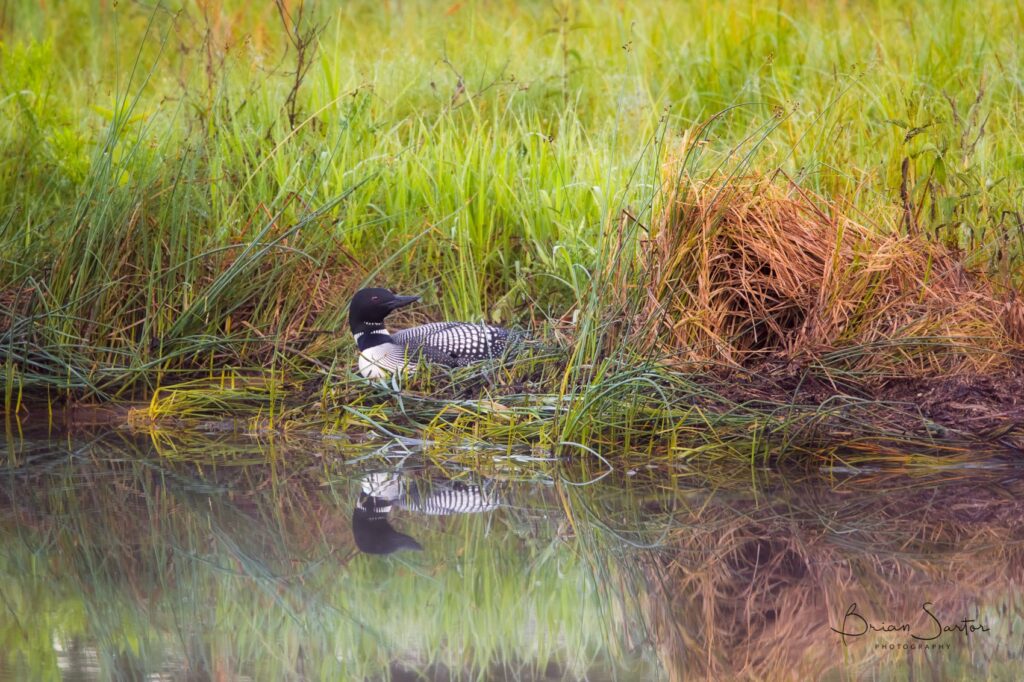
The fourth of July holiday falls during a particularly sensitive time of year for loons, with some loons still sitting on their nests and other loon families busy feeding young chicks that are less than 4 weeks old. Loons typically nest in May or June with chicks hatching during June or July. During the 28 day incubation period where loon chicks are developing inside of their eggs, it is very important that the adult loons spend as much time as possible sitting on the eggs, which regulates their temperature to keep the growing chicks healthy while also protecting eggs from predation. Disturbances like loud fireworks, boaters or paddlers approaching nests too closely, or off-leash dogs can easily spook an adult loon off the nest, leaving the eggs vulnerable to predation, overheating, or chilling. Boats creating large wakes have the potential to flood or even wash eggs completely out of nests! While some loon pairs will try to nest again after losing eggs, if they experience a nest failure in July it is usually too late in the season for another nesting attempt.
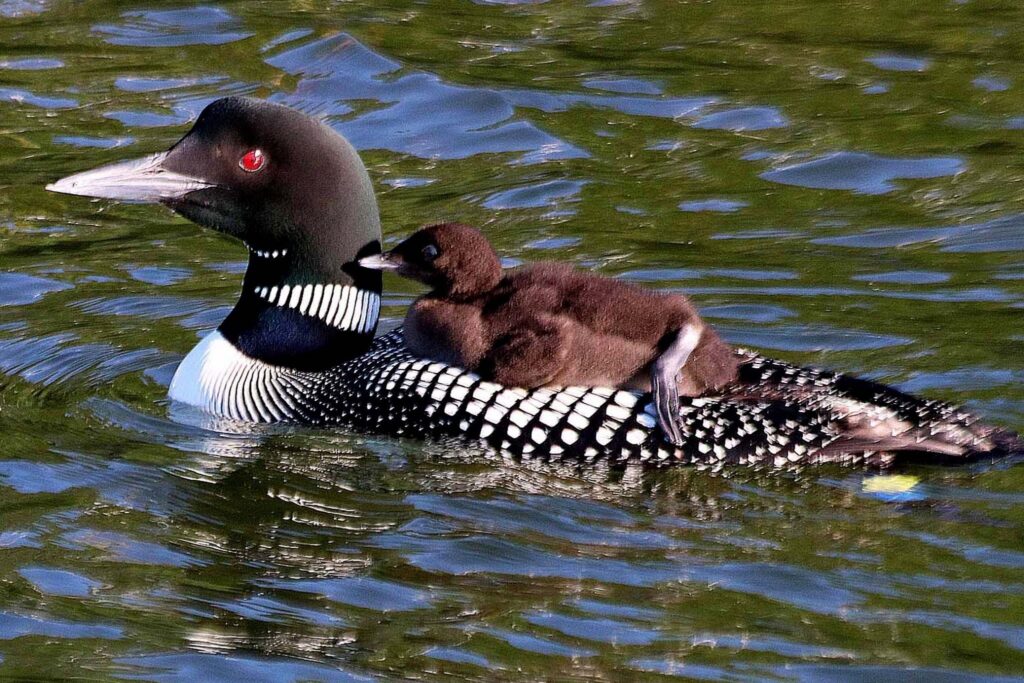
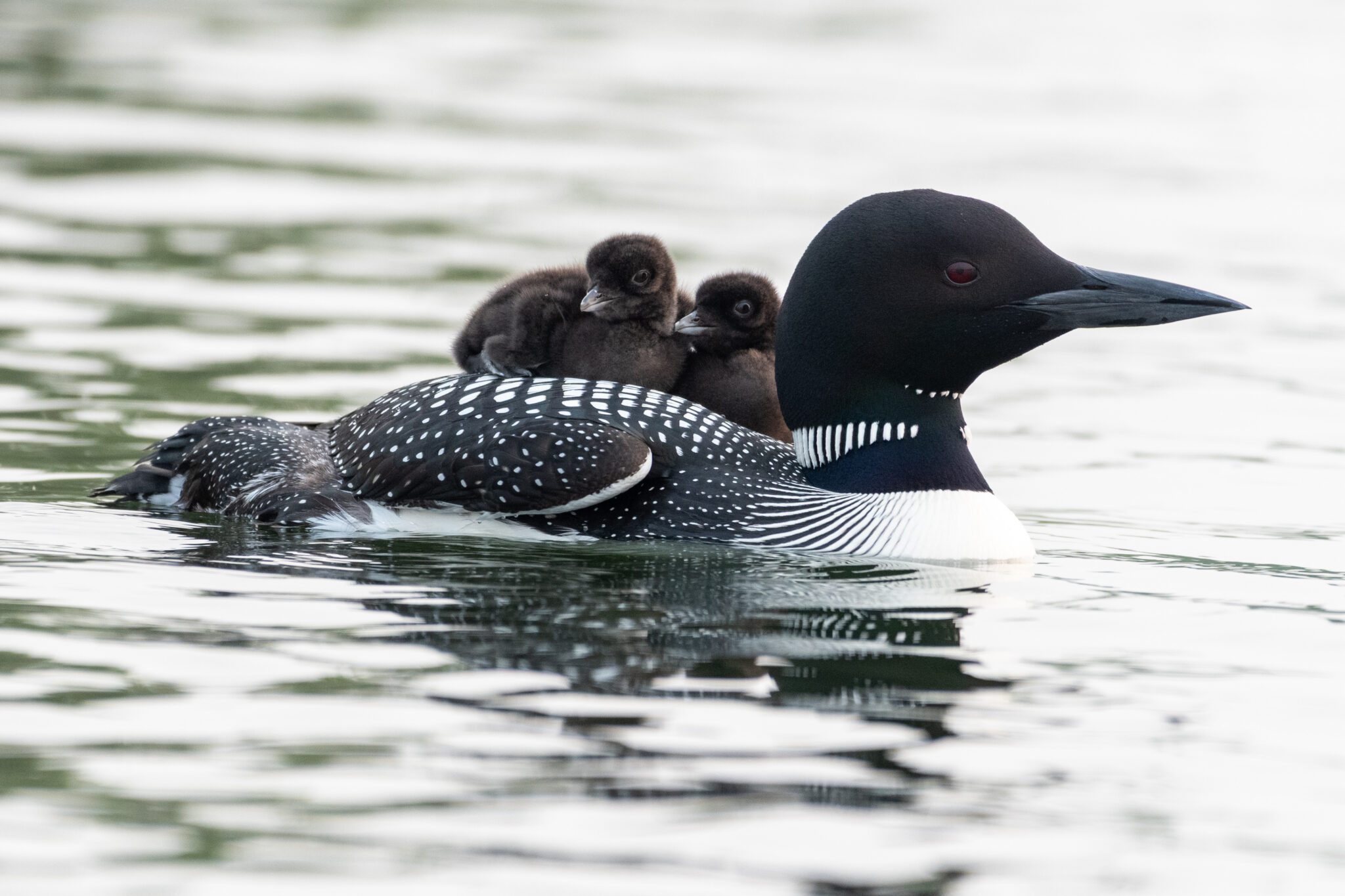
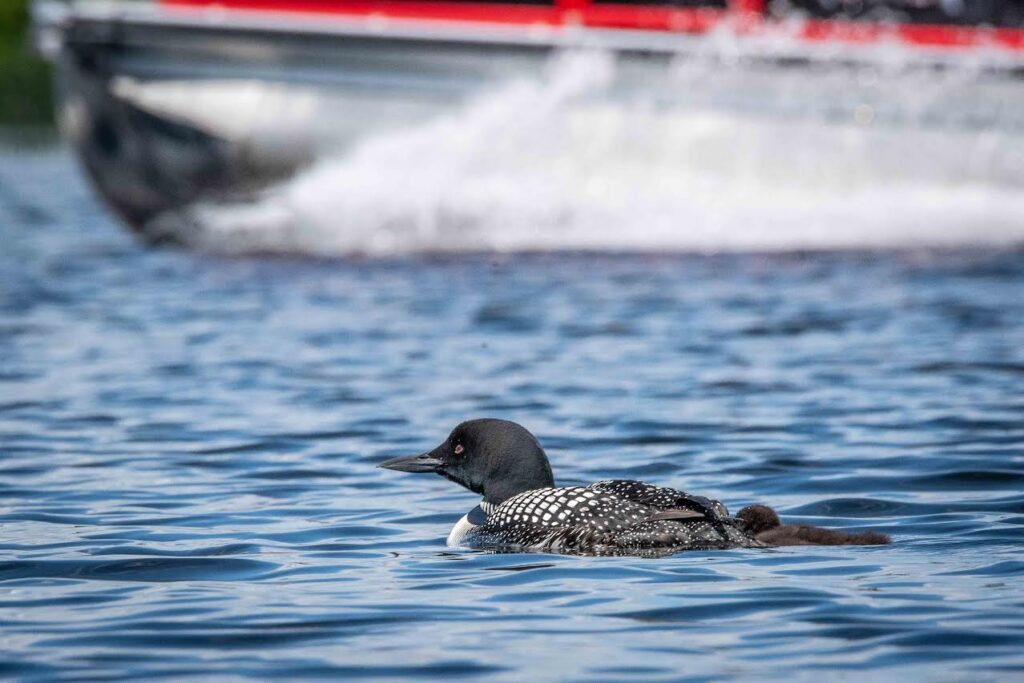
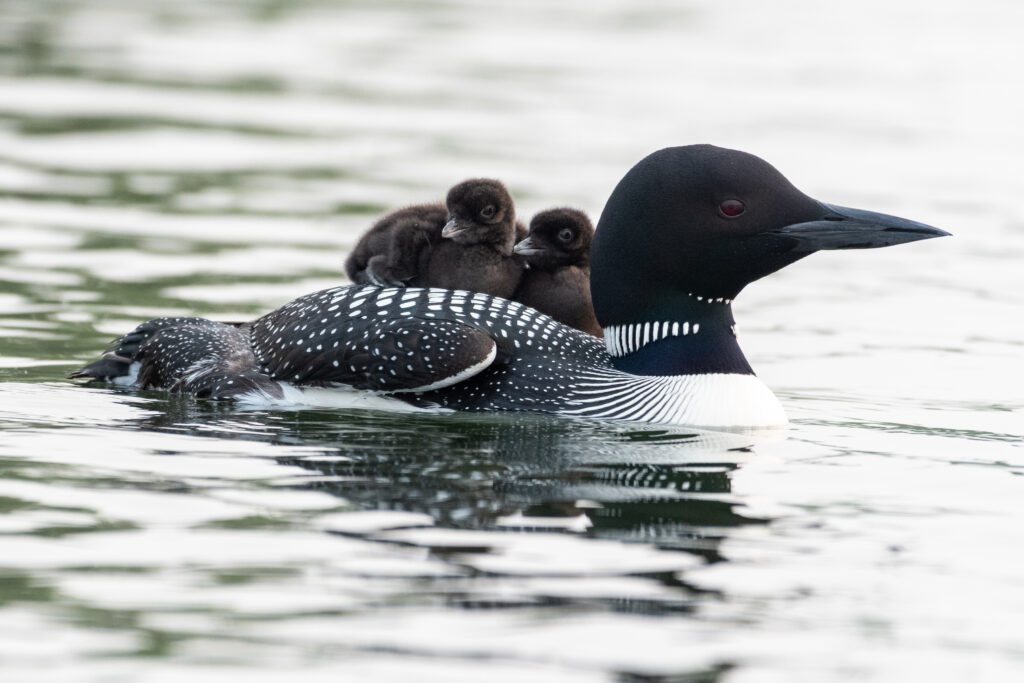
For the first 8 to 9 weeks of a loon chick’s life, they are covered in fluffy feathers referred to as their downy plumage. In this plumage, chicks are very buoyant and have difficulty diving below the water’s surface and staying submerged. As the chicks gain strength; their swimming, diving, and foraging skills improve with each passing week – however, until their juvenile plumage fully grows in around 8 or 9 weeks and allows them to efficiently compress air out of their feathers and dive, they are unable to dive deep under the water’s surface or stay submerged for very long. When fast-moving boats and jetskis approach loon chicks, they are not able to dive to safety, making them very vulnerable to fatal watercraft collisions. For freshly hatched loon chicks less than 2 weeks old, they are spending much of their time riding atop the backs of their parents. Adult loons are very protective of their chicks, and are less likely to dive out of the way while protecting chicks either on their backs or by their side, placing both adults and chicks at an elevated risk for watercraft collisions. Large wakes don’t just threaten nesting loons either: these waves can separate loon parents from their chicks, which leaves the small chicks vulnerable to predation. A bald eagle can easily grab an unattended loon chick of any size, and smaller chicks are also susceptible to predation by snapping turtles or large fish.
While adult loons are excellent swimmers and divers, they are not invincible. Adult loons usually able to steer clear of approaching watercraft by avoiding high traffic areas and diving out of the way, but it is difficult for a loon to track and anticipate the movements of multiple highspeed watercraft that are often moving erratically, such as a jetski or a boat pulling wakeboarders or skiers. During periods of heightened boat activity, there are simply too many moving objects on the lake for loons to reliably avoid all of them, and accidents end up happening. Long-term studies on causes of loon mortality from the Northeastern United States suggest that trauma from watercraft collisions is one of the most common causes of death for adult loons. In Minnesota, we do not have state-specific statistics on loon mortality – YET! In collaboration with the Minnesota DNR’s Nongame Wildlife Program, the National Loon Center is currently working on a research project that aims to synthesize long-term necropsy data and evaluate causes of mortality for Minnesota’s loon population. This endeavor will build on the National Loon Center’s ongoing efforts, begun in 2021, to collect deceased loons from around the state and send them to the University of Minnesota Veterinary Diagnostics Laboratory for necropsy. These efforts to learn more about common causes of death in Minnesota loons will help us understand the conservation concerns specific to our state and guide our future research, conservation, and education priorities.
Necropsy – a surgical procedure and examination of a deceased animal’s carcass performed to determine a cause of death (animal equivalent of an autopsy)
If you know how to interpret the language of loons, you will notice that they assert their boundaries and communicate when they are feeling stressed or threatened. Three common behaviors exhibited by a threatened loon are the hangover position, penguin dance, and alarm calls.
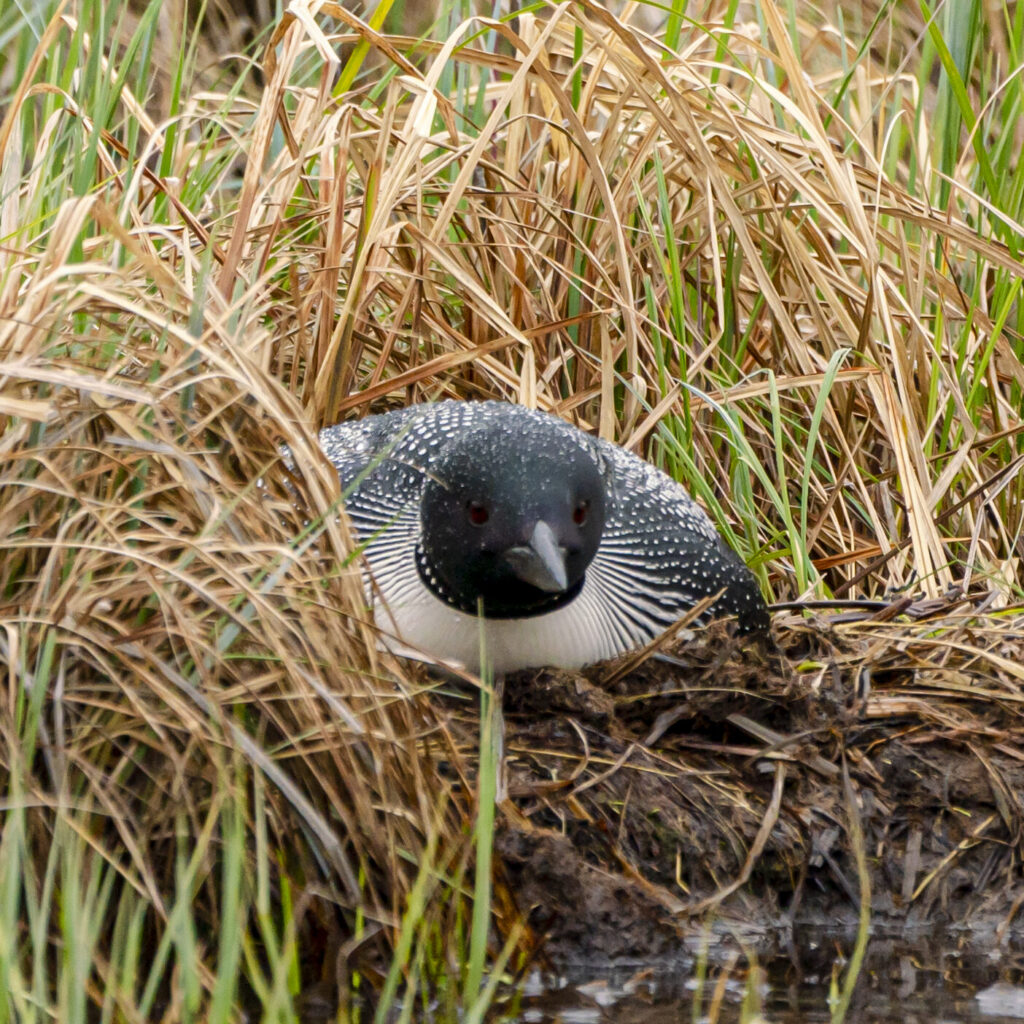
Hangover Position
Nesting loons will flatten their bodies and hang over the side of the nest with their neck and head craned down toward the water, preparing them for a quick escape. Swimming loons may ride low in the water, flattening and submerging most of their bodies.
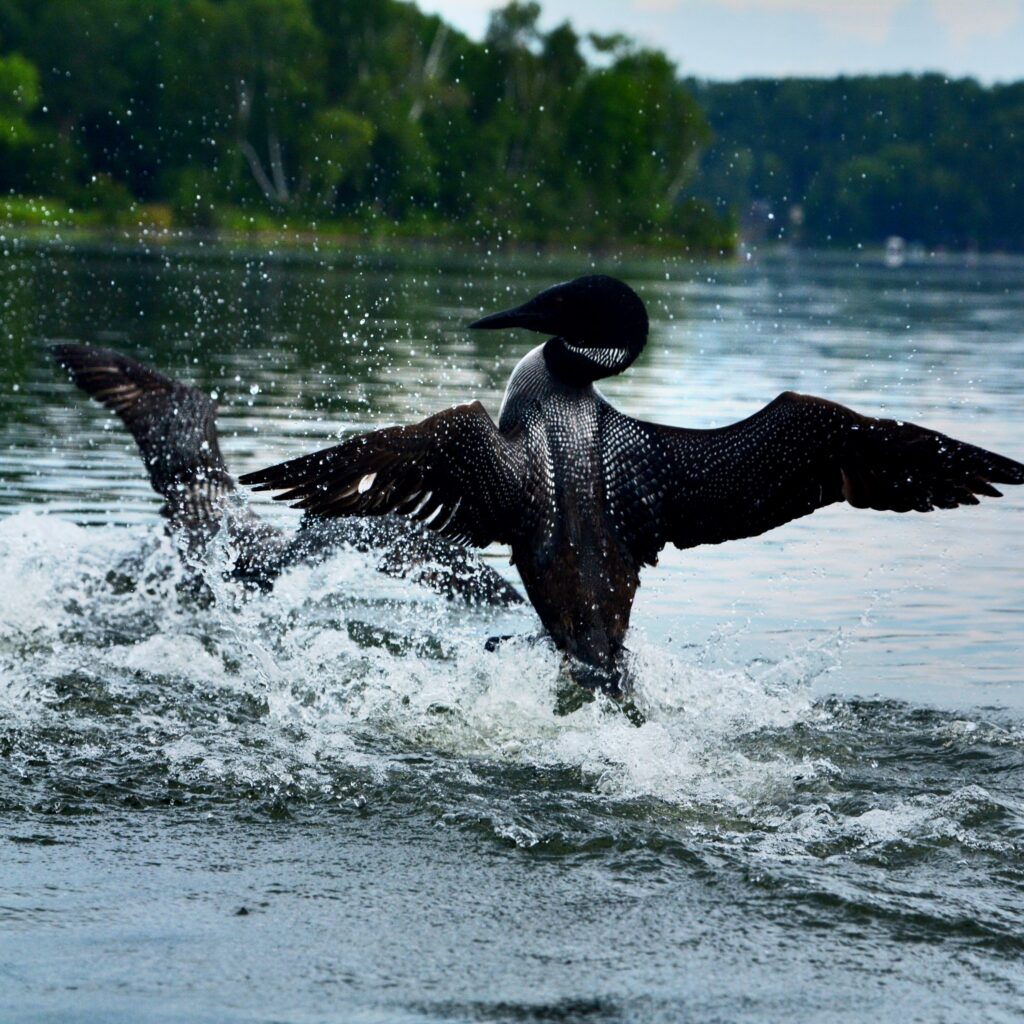
Penguin Dance
Loons will rear up out of the water while quickly paddling their feet and either flapping their wings or pinning them close against their body. This behavior is often used when there is an intruding loon, but can also be used if a boat or human is venturing too close.
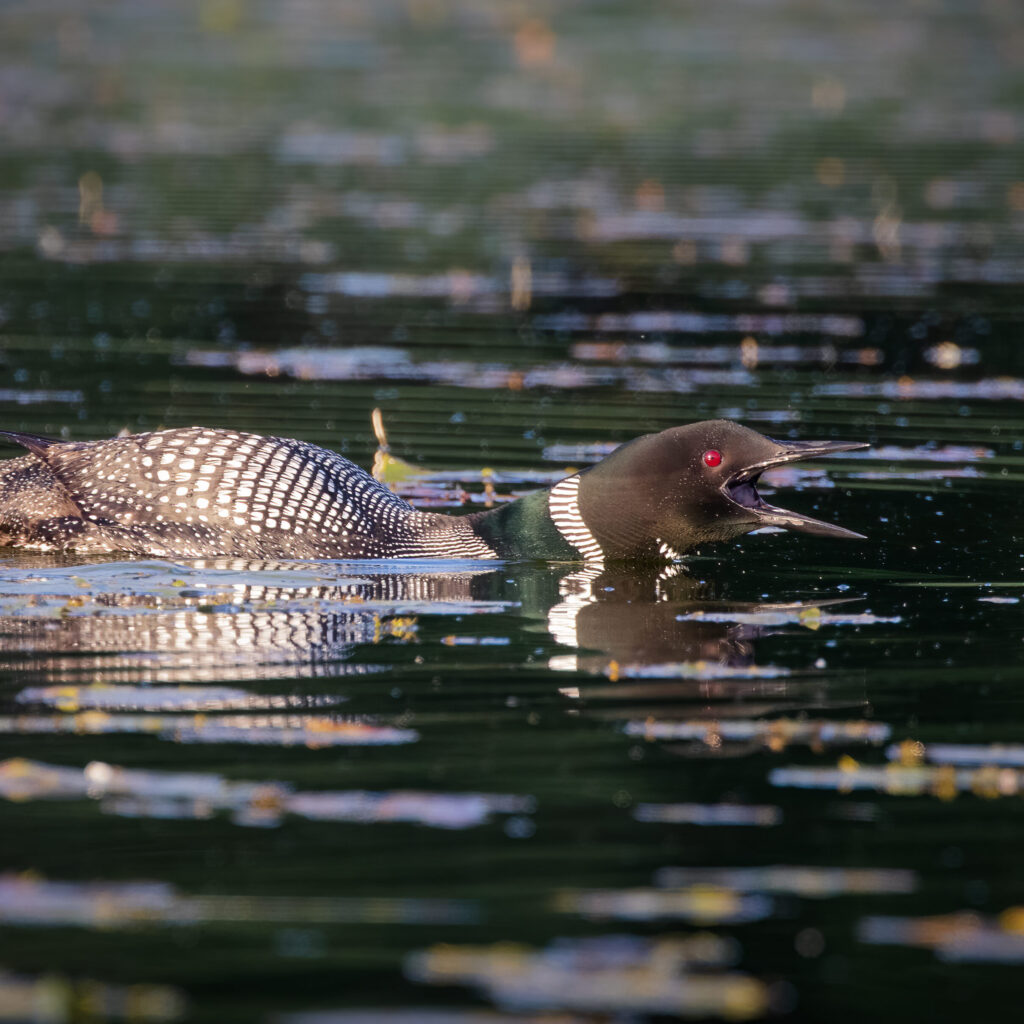
Alarm Calls
Loons have four primary vocalizations, three of which can indicate a loon is in distress. Any of these calls issued in conjunction with another defensive behavior is a strong sign that the loon is feeling threatened:
- A tremolo is the most commonly used alarm call for loons. This call is also made by loons in flight to announce their presence, and is not always an indicator of stress.
- A yodel is a call made only by male loons, and is used in territorial or defensive displays.
- A wail is typically a long-distance contact call between pair members, but can also function as an alarm call. When a wail is being issued to signal alarm, it generally sounds more frantic than the typical wail and may consist of more notes than the typical two.
While you’re out enjoying lake days under the heat of the summer sun, there are many small actions we can take to ensure that human fun doesn’t result in loon fatality. Here are some tips and tricks for navigating summer recreation with loon safety in mind!
Tips for Loon-safe Boating
- Slow Down!
- Be respectful of no-wake zones
- Avoid creating a wake within 200 feet of the shoreline
- Look Out for Loons!
- Assign someone on the boat to be a loon lookout and announce to the driver when loons are sighted
- Loons and chicks are usually hanging out near the shore this time of year – take extra care in these areas
- Be Thoughtful & Respectful About Recreation!
- Try to avoid setting off fireworks near nesting loons
- Avoid getting close to nesting loons – even if you are using non-motorized watercraft, stay at least 200 feet away
- Try not to approach loons on the water within 100 feet – it’s alright if they choose to approach closer, but leave that choice to them
Other Tips for a Loon- and Lake-safe Summer
- Prevent the Spread of Aquatic Invasive Species
- Minnesota law mandates cleaning any visible debris off your watercraft, draining all water, and leaving drain plugs open during transport
- Dispose of live bait in the trash – do NOT release
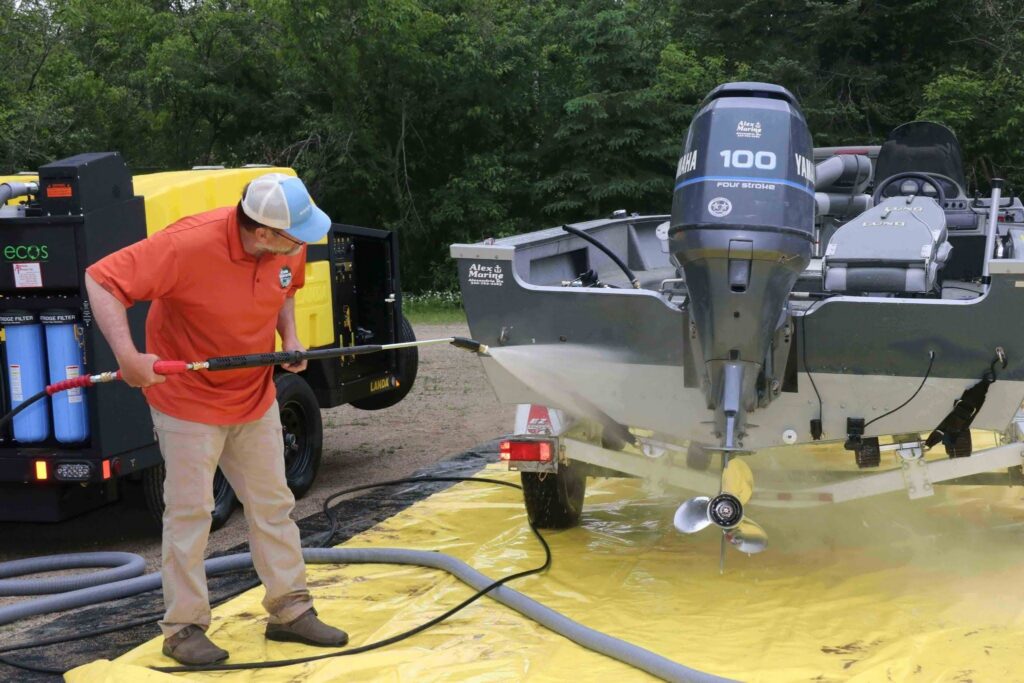
- Best practices – dry your watercraft in the sun for at least 5 days before going to another lake OR visit a decontamination station for high temperature high pressure water spraydown
- Remember – any aquatic gear can collect AIS! This includes floaties, life jackets, shoes, etc.
- Minnesota law mandates cleaning any visible debris off your watercraft, draining all water, and leaving drain plugs open during transport
- Fish Loon-Safe
- Use non-lead fishing tackle
- Clean up fishing line
- Do not fish directly next to loons
- Clean Up After Yourself
- Pack out what you pack in – keep track of your trash
- Check watercraft and make sure no oil or gas is leaking
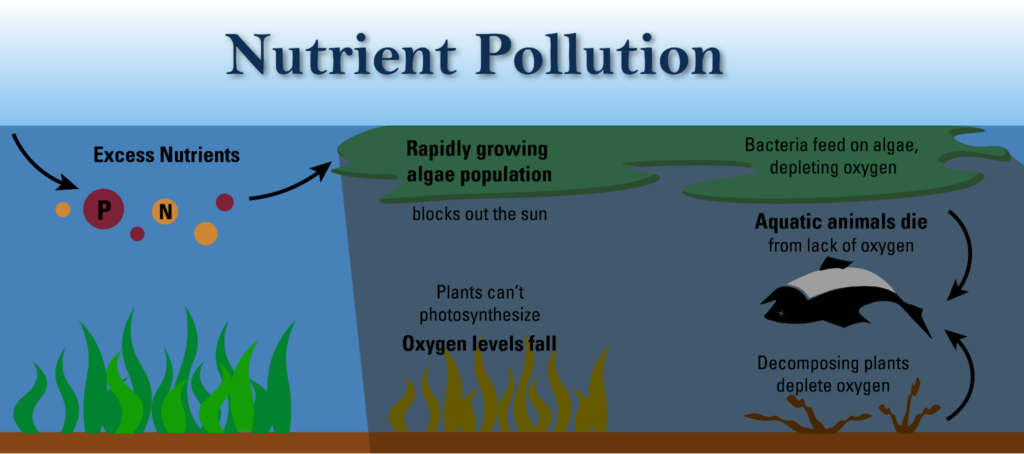
- Be conscious of sunscreen/bugspray ending up in the waters
- Chemical sunscreens can be harmful to aquatic life – mineral based sunscreens and physical protection like sun shirts are a safer option
- Heavy duty bug repellents (ex. those containing DEET, permethrin, or picardin) can wash off your skin into the water and become toxic to aquatic life. Opt for rinsing before getting in the lake or using natural non-toxic products.
The National Loon Center wishes everyone a happy Independence Day and a summer of fun, sun, and memories made on the water – we hope this information helps you and your family confidently enjoy lake recreation while keeping our loons safe!